There are days when I look around and wonder—
Are we really leaving enough green behind?
The concrete keeps rising.
The roads keep widening.
The city keeps getting busier.
And yet, sometimes, all it takes is one tree to make me hopeful again.
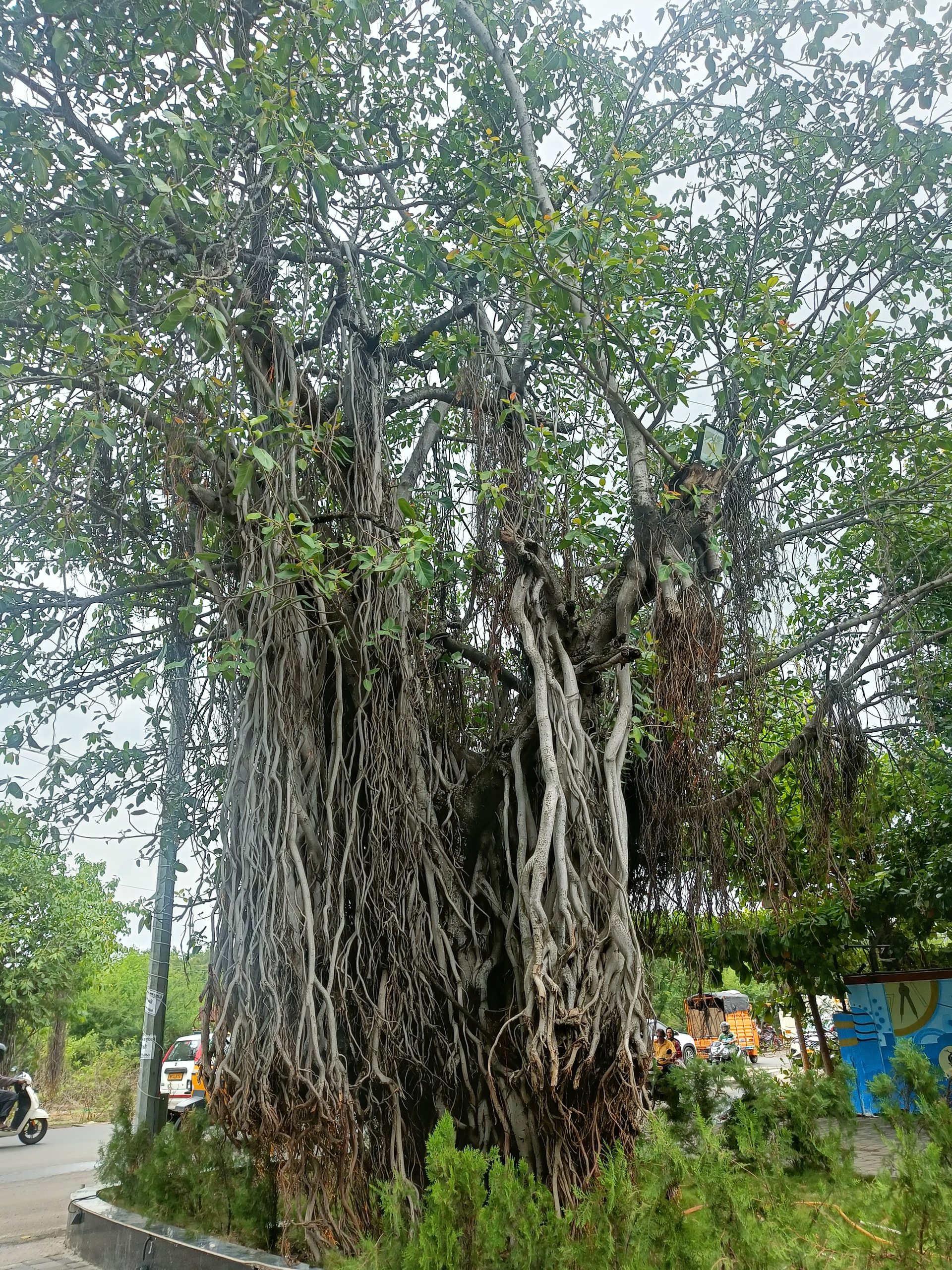
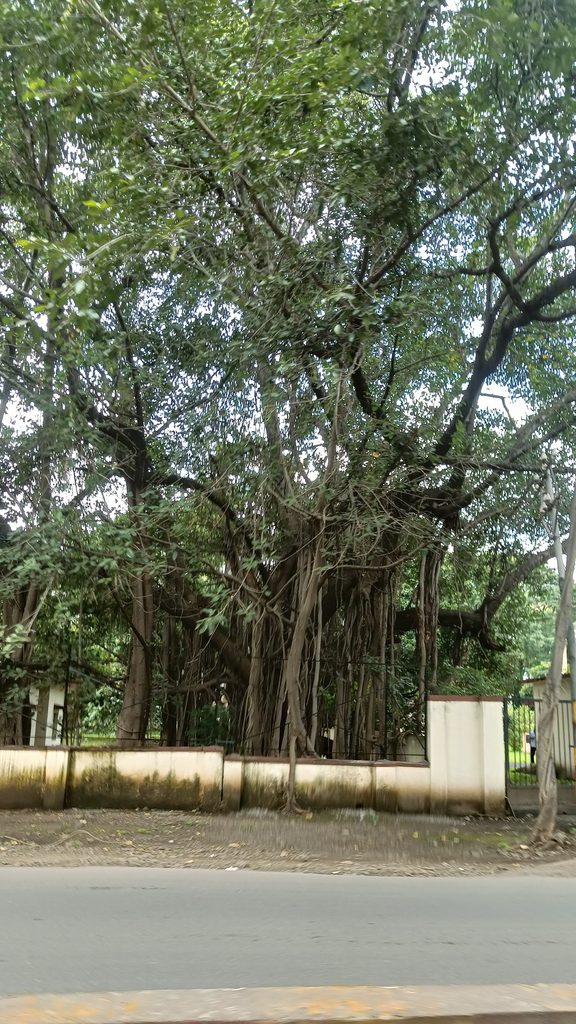
For me, in Pune, one such tree is the Banyan.
A tree that doesn’t simply grow upward.
It grows outward.
It spreads.
It reaches down again.
It creates roots from its branches and slowly builds an entire world around itself.
Perhaps that is what I love most about the Banyan.
It reminds me that growth does not always have to mean reaching higher.
Sometimes, growth means putting down more roots.
A tree that feels like a little forest
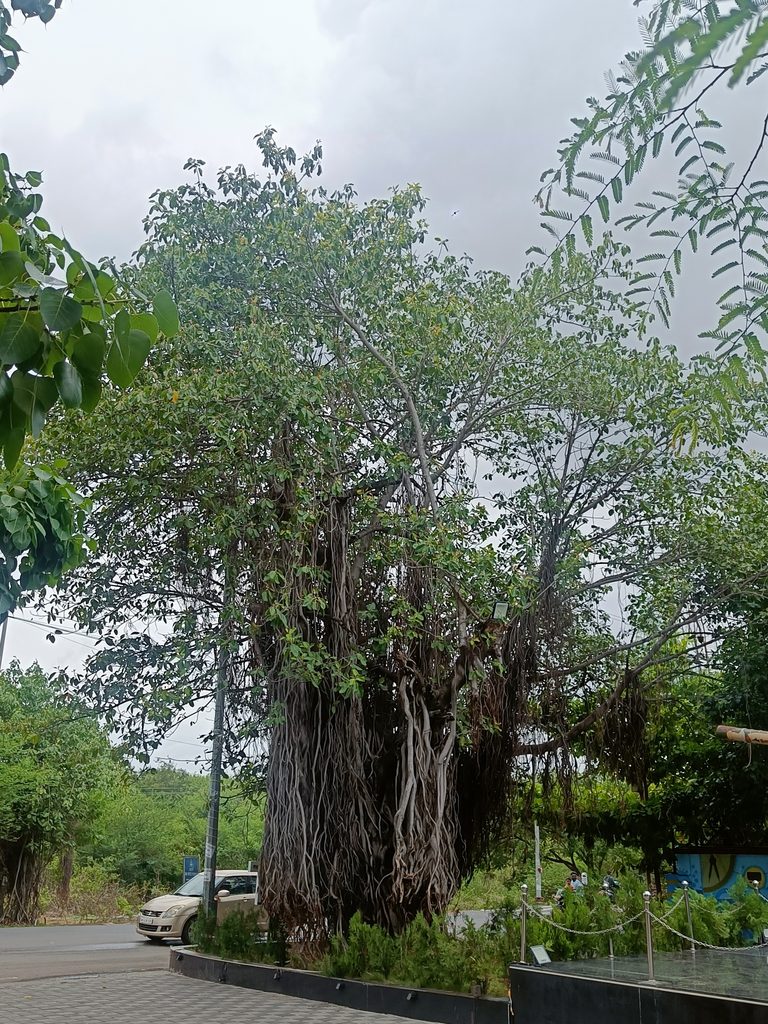
A mature Banyan can feel less like a tree and more like a tiny ecosystem.
Its enormous canopy creates shade. Its branches and aerial roots create structure and shelter. Birds, insects and other forms of life find spaces within this living architecture.
And when I stand beneath one, I don’t feel like I am standing beneath a single tree.
I feel like I am standing beneath a community.
Perhaps that is why the Banyan has always carried such a special place in our culture and imagination.
It is old, generous and patient.
It doesn’t hurry.
It simply keeps growing.
Pune has more green stories than we sometimes notice
Living in Pune, I have slowly realised that the city’s green wealth is not limited to parks and gardens.
It is standing beside roads.
Inside old campuses.
Along neighbourhoods.
In forgotten corners.
Behind walls.
In gardens that have quietly existed for generations.
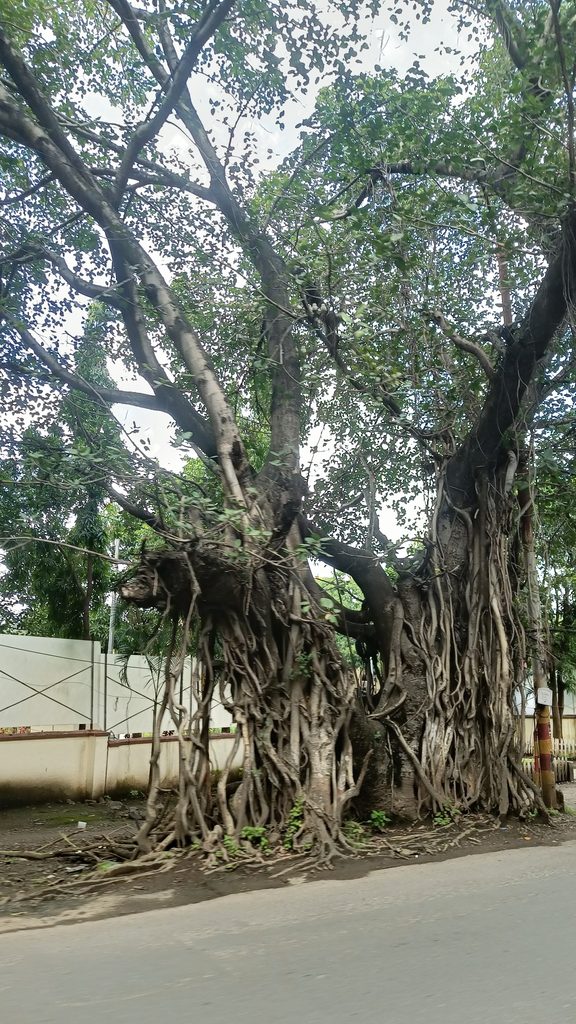
Pune has several trees recognised for their historical, botanical and ecological significance. The Banyan at the Savitribai Phule Pune University campus is among the trees documented as heritage trees.
And then there is Empress Botanical Garden, where old trees—including Banyans believed to be around 250–300 years old—stand as living reminders of how long trees can outlive our own timelines.
Think about that for a moment.
A tree can begin its life long before we are born…
and still be standing when generations after us arrive.
That is humbling.
My little tree series
Maybe that is why I have started noticing trees differently.
Earlier, I would simply walk past them.
Now I stop.
I look up.
I notice the shape of a canopy.
The texture of bark.
A bird sitting quietly on a branch.
A new leaf appearing after summer.
Roots finding their way through cracks.
Flowers that I would otherwise have missed.
And suddenly, an ordinary walk becomes a conversation with nature.
This is what I want my tree series in Pune to be about.
Not a scientific catalogue.
Not just a list of species.
But little stories of the trees I encounter.
The trees that make me pause.
The trees that have witnessed the city changing.
The trees that continue to stand quietly while everything around them moves faster.
Green hope
Sometimes, sustainability conversations can feel overwhelming.
Climate change.
Pollution.
Waste.
Deforestation.
Loss of biodiversity.
There is so much to worry about.
But trees give me another way of looking at it.
They remind me that change can also begin quietly.
One sapling.
One protected tree.
One person choosing to notice.
One child learning the name of a tree.
One neighbourhood deciding that an old tree is worth saving.
One person choosing to walk instead of drive for a short distance.
One balcony made greener.
One patch of soil left alive.
One more reason to look up.
And perhaps this is why these trees give me immense green hope.
Because they are proof that nature is not asking for grand speeches.
It is asking for space.
Care.
Patience.
And our willingness to coexist.
The Banyan’s lesson
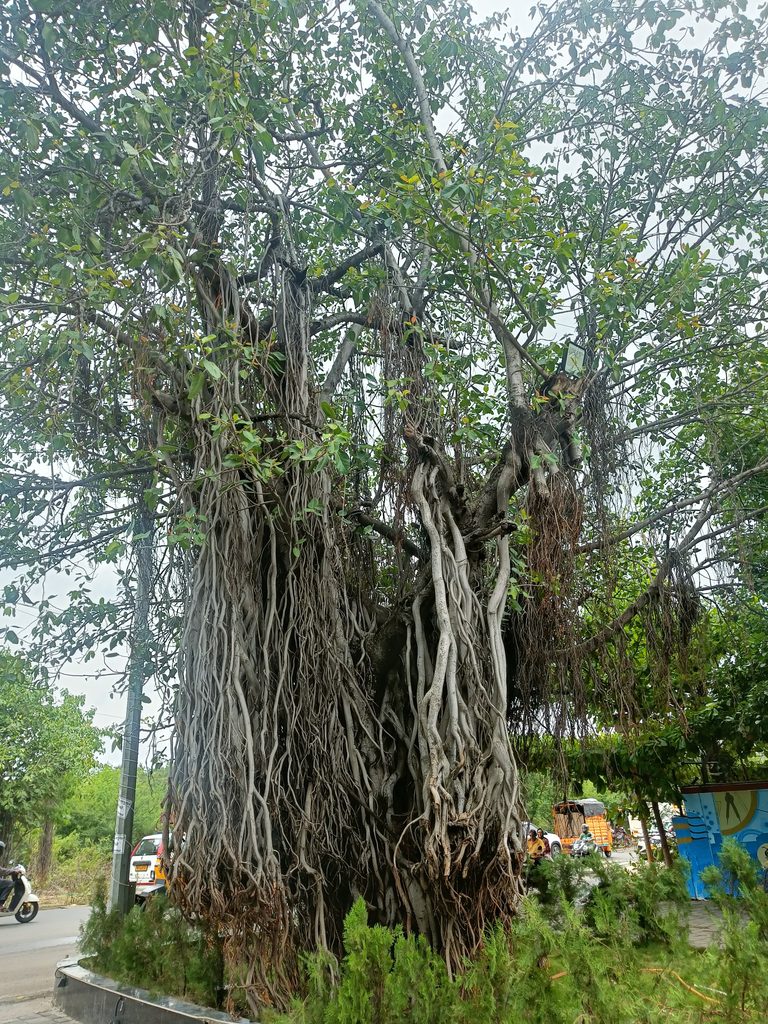
The Banyan doesn’t ask,
“How quickly can I grow?”
It simply keeps growing.
Root by root.
Branch by branch.
Season by season.
And perhaps there is a lesson there for us too.
We don’t have to change the entire world in one day.
We can begin where we are.
Notice the tree outside our window.
Learn its name.
Protect the old tree in our neighbourhood.
Plant native species where appropriate.
Carry the habit of caring into our homes, streets and communities.
Because every time we choose to notice nature, we become a little more connected to it.
And perhaps every connection becomes a tiny act of conservation.
So, this is my little Tree Series from Pune—
a collection of trees that make me stop, look up and feel grateful.
A collection of green stories.
A collection of living landmarks.
And hopefully, a collection of reminders that even in a rapidly growing city…
there is still so much green to love.
And as long as there are trees standing—
I will keep believing in green hope.
One tree.
One story.
One hopeful heart at a time.
Moreover, I’m sharing my #TreeLove with the #Thursday Tree Love blog hop, a photo feature hosted by Parul Thakur. A post to make us aware of the trees around us. Do you love Trees? Explore the trees in your neighborhood and join Tree Love.
Additionally, I am linking this to #SkywatchFriday a great sky watchers community for amazing sky photographs worldwide.
You might also like to see my Tree Love in these Tree Posts:
- Did you hug a tree today?
- Flowering summer blooms of Indian summers.
- October Flowers of Parijaat
- How Tree Love taught me about New Roots, New Journeys, and New Branches
- The beautiful sunset peeing from trees.
Prachi The Tatwa Girl shares stories inspired by the five elements:
- Agni (Fire): Recipes & culinary creations, inspired by Agni’s energy and lifeforce.
- Vayu (Air): Festivals, culture, & traditions, everything around us like beliefs and mythology.
- Aakash (Sky): Travel tales under infinite skies, and my journey experiences.
- Jal (Water): Flowing thoughts & emotions, like water are my flow of thoughts.
- Prithvi (Earth): Eco-friendly living & sustainability, and harmony of our greener planet.
🎙 Green Tatwa Talks: Explore sustainable practices & inspiring Green Warriors on my podcast!
Follow me on LinkedIn, Instagram, & Facebook, PragunTatwa Feed for more eco-friendly stories.

The Banyan tree symbolizes eternity and immortality. The most famous example is the Akshayavat
Leave a Reply