World Energy Saving Day is celebrated on October 21st every year. It’s a day to reflect on the importance of energy conservation and to take steps to reduce energy consumption.
Saving energy at home is not only good for the environment but also helps reduce electricity bills. Implementing simple energy-efficient practices can make a significant difference in overall energy consumption. Here are some useful tips to save energy in different areas of your home.
Electronic Devices
- Do not switch on the power when TV and audio systems are not in use, as idle operation can lead to an energy loss of about 10 watts per device.
Computers
- Turn off your home office equipment when not in use. A computer running 24 hours a day consumes more power than an energy-efficient refrigerator.
- If your computer must be left on, turn off the monitor, as it consumes more than half of the system’s energy.
- Setting computers, monitors, and copiers to sleep mode when inactive can cut energy costs by approximately 40%.
- Battery chargers for laptops, cell phones, and digital cameras draw power even when not in use. Unplug them when they are not needed.
- Screen savers do not save energy. Shut down your computer when it is not in use to reduce system wear and save electricity.
Washing Machines
- Always wash with full loads to optimize energy use.
- Use the optimal amount of water required.
- Utilize the timer facility to save energy.
- Use the correct quantity of detergent to prevent excessive washing cycles.
- Use hot water only for heavily soiled clothes.
- Prefer cold water for the rinse cycle.
- Opt for natural drying instead of electric dryers.
Air Conditioners
- Choose air conditioners with automatic temperature cut-off features.
- Keep regulators at a “low cool” setting.
- Use a ceiling fan along with an air conditioner to distribute cool air effectively.
- Seal doors and windows properly to prevent cool air from escaping.
- Leave enough space between the air conditioner and the walls for better air circulation.
- Install a roof garden to reduce the cooling load on air conditioners.
- Use windows with sun films or curtains to block excessive heat.
- Set thermostats as high as comfortably possible during summer to minimize energy use.
- Avoid setting the thermostat lower than normal when turning on the air conditioner, as it does not cool the home faster and may cause excessive cooling.
- Keep lamps and TVs away from the thermostat to prevent unnecessary cooling.
- Shade air-conditioning units with trees or shrubs but ensure they do not block airflow. A shaded unit can use up to 10% less electricity.
Preventive Measures
- Only qualified professionals should handle electrical repairs.
- Regularly service electrical equipment through a competent electrician.
- In case of a short circuit or fire, switch off the main power supply immediately.
- Ensure easy access to the main switch in case of emergencies.
- Check extension cords for cuts, poor insulation, or loose connections.
- Make sure plug pins are tight and not loose.
- Use switches with the correct current rating and those with indicators showing ON/OFF status.
- Use appliances with three-pin plugs and connect them to three-pin sockets for safety.
- Do not overload electrical outlets or rely on extension cords as a replacement for additional outlets.
- Turn off electrical appliances when not in use.
- Ensure proper earthing for the building to prevent electrical hazards.

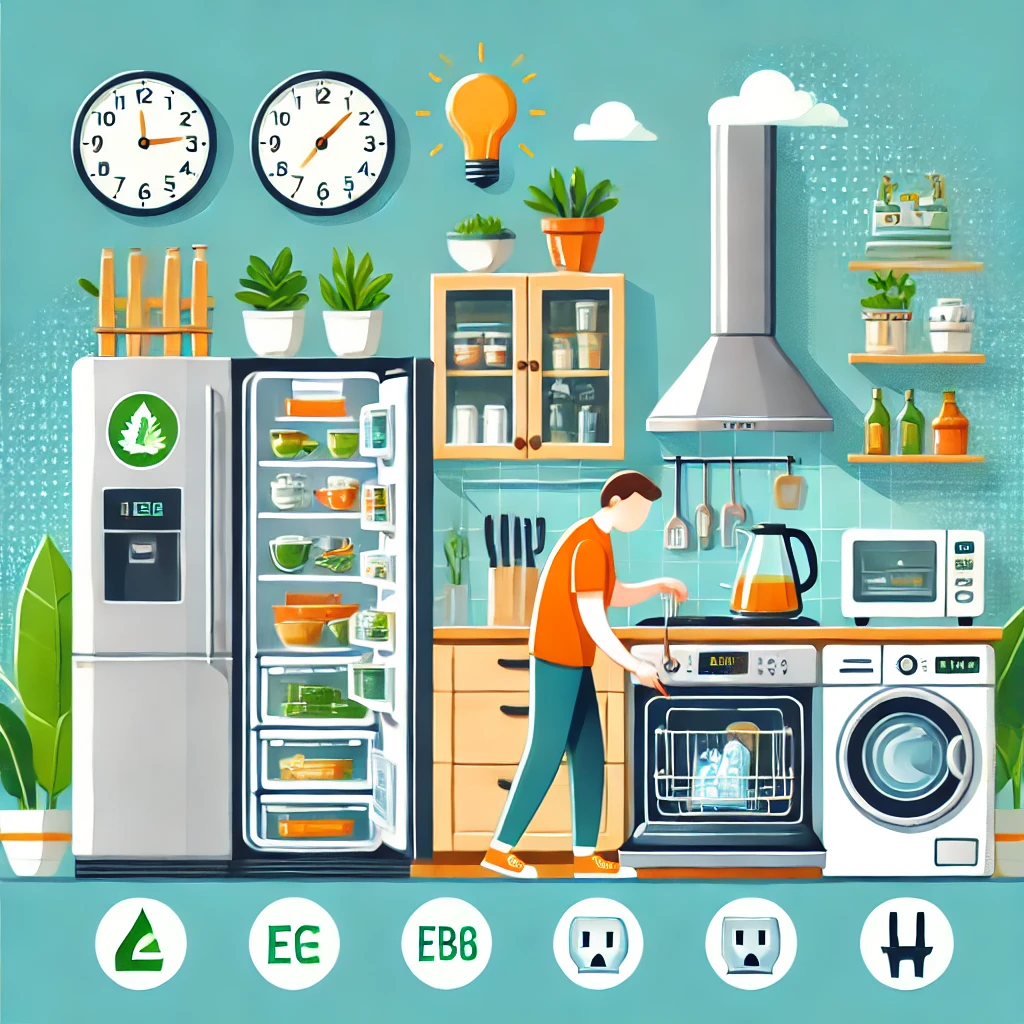
Kitchen Appliances
- Refrigerators: Keep refrigerator doors closed properly to maintain efficiency. Regularly defrost the unit to improve performance. Set the temperature to an optimal level to prevent excessive energy use.
- Microwaves: Use microwaves efficiently by cooking in batches and covering food to reduce cooking time. Avoid keeping the microwave door open unnecessarily.
- Ovens: Use a convection oven whenever possible, as it distributes heat more evenly and cooks food faster. Preheat only when required and avoid opening the door frequently.
- Dishwashers: Run the dishwasher only with full loads. Use energy-saving settings and air-dry dishes instead of using the heat-dry option.
- Electric Kettles: Boil only the required amount of water to prevent excess energy consumption. Keep the heating element clean for efficient operation.
- Blenders & Mixers: Use short pulses instead of running continuously. Unplug the appliances when not in use to avoid phantom energy loss.
By adopting these simple yet effective energy-saving practices, you can contribute to a sustainable future while also reducing household electricity costs. Making small changes in daily routines can have a big impact on overall energy consumption.
🌿 Stay Tuned for More
🌿 At Prachi The Tatwa Girl, I celebrate the five elements and their connection to life and nature. Join me in exploring ways to live sustainably, cherish our planet, and honor every tiny miracle it holds.
- Agni (Fire): Recipes & culinary creations, inspired by Agni’s energy and lifeforce.
- Vayu (Air): Festivals, culture, & traditions, everything around us like beliefs and mythology.
- Aakash (Sky): Travel tales under infinite skies, and my journey experiences.
- Jal (Water): Flowing thoughts & emotions, like water are my flow of thoughts.
- Prithvi (Earth): Eco-friendly living & sustainability, and harmony of our greener planet.
🎙 Green Tatwa Talks: Explore sustainable practices & inspiring Green Warriors on my podcast!
📌 Follow me on LinkedIn, Instagram, & FaceBook, and PragunTatwa Feed for more eco-friendly stories.
🌳 Did you hug a tree or spot a bird today? Let’s spread the love and protect the earth’s wonders, one feathered friend at a time!🎙 Check out Green Tatwa Talks
Leave a Reply