
Some books don’t just tell a story — they shift something within you.
— they hold your face gently, turn it toward the light, and ask you to look at yourself again.
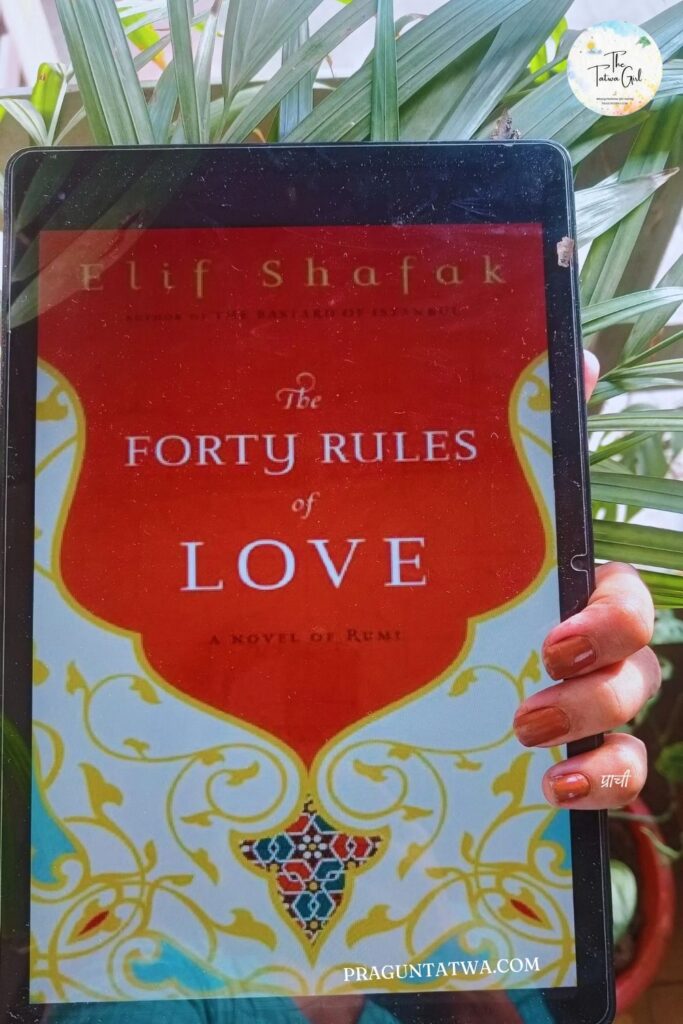
The Forty Rules of Love by Elif Shafak was exactly that kind of book for me.
The Forty Rules of Love is one of those rare novels that feels less like reading and more like remembering a truth you had forgotten.
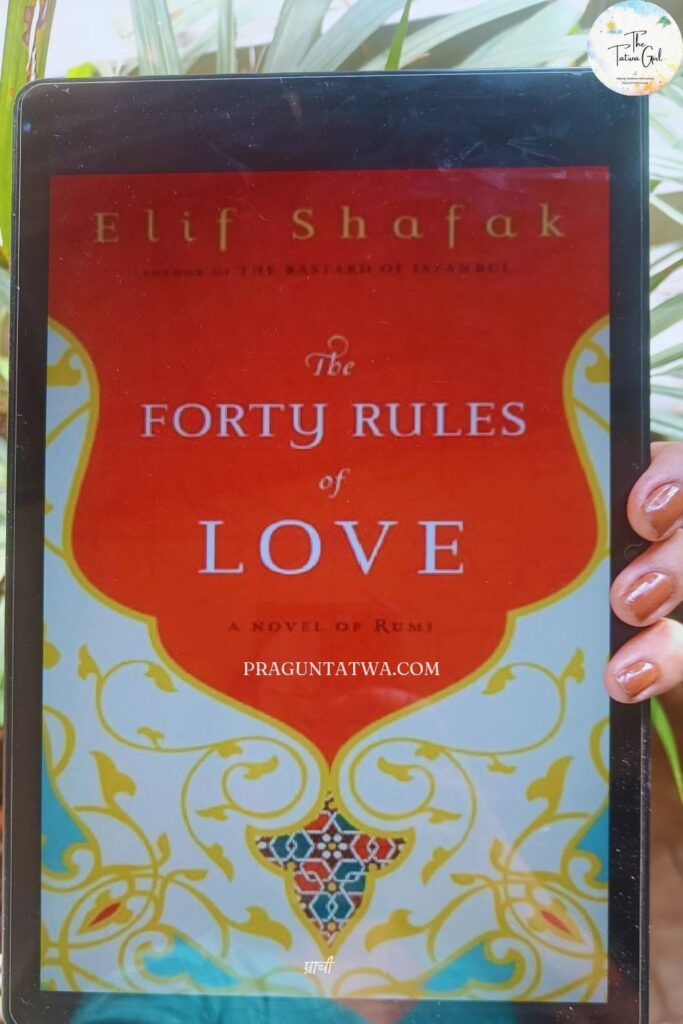
At first glance, it’s a story about Ella, Rumi, and Shams of Tabriz.
But in truth, it’s a story about us — the questions we avoid, the longing we carry, and the ways love (in all its forms) keeps insisting on transforming us.
I first read it on Kindle — late nights, highlights everywhere, pausing often just to breathe. And now, I know this for certain: this is a book I want in my hands, on my shelf, in my little home library — a paperback that gathers its own scent and energy over time.
The Two Stories, One Soul
Shafak weaves two timelines seamlessly:
- Ella, a 21st-century woman questioning her life, her choices, her silences.
- Rumi and Shams, from the 13th century, where companionship becomes transformation, and love becomes a burning, cleansing force.
The beauty lies in how these narratives mirror each other, almost like parallel rivers flowing toward the same sea.
The Rules Themselves
The “forty rules” aren’t prescriptive; they’re reminders. They aren’t commandments — they are invitations.
Simple, but the kind that stay in your bloodstream long after.
They talk about patience, faith, They ask you to dissolve ego, to embrace humility, to recognise every person as a mirror, to trust the quiet revolutions inside you, we avoid until life corners us…
It made me rethink not just relationships, but the daily frictions, the fleeting encounters, the unexpected teachers.
The Five Elements — A Structure That Resonated Deeply
One of the most striking aspects of this book is how it is divided into five elemental sections: Earth, Water, Wind, Fire, and Void.
As someone who is deeply passionate about the panchtatwas of nature, this structure wasn’t just clever — it felt personal, like the book was speaking my own language.
Each element enriches the emotional rhythm of the story:
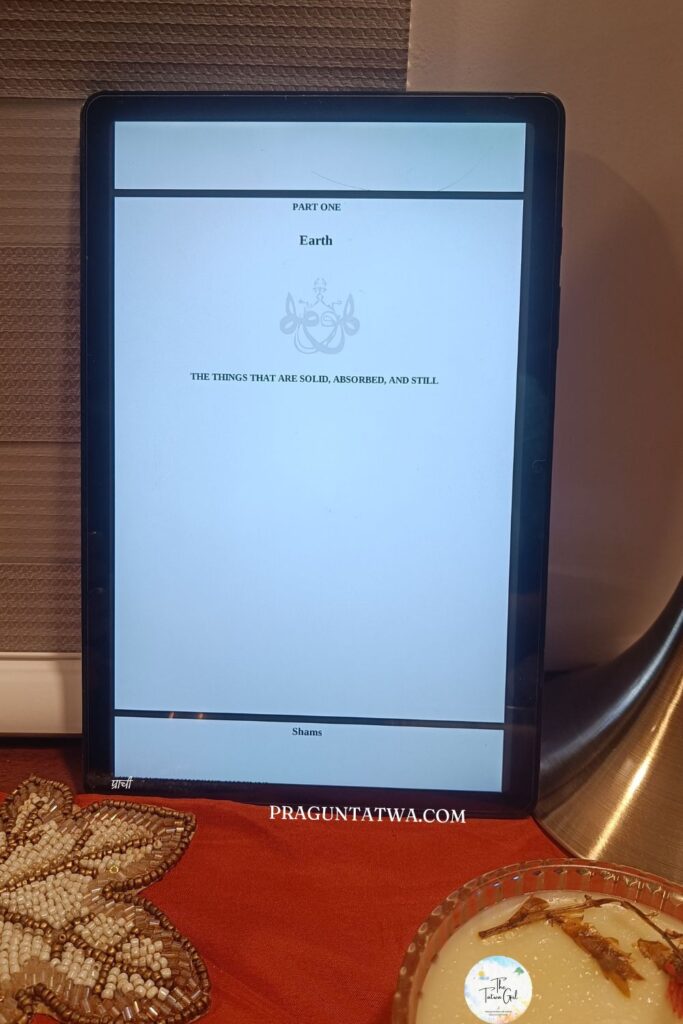
🌍 Earth — Stillness and Absorption
This section grounds you. It represents all that is solid and unmoving — the foundations of belief, the weight of habit, the quiet beginnings of transformation. The grounding energy of the story.
Where foundations form and inner shifts quietly begin.
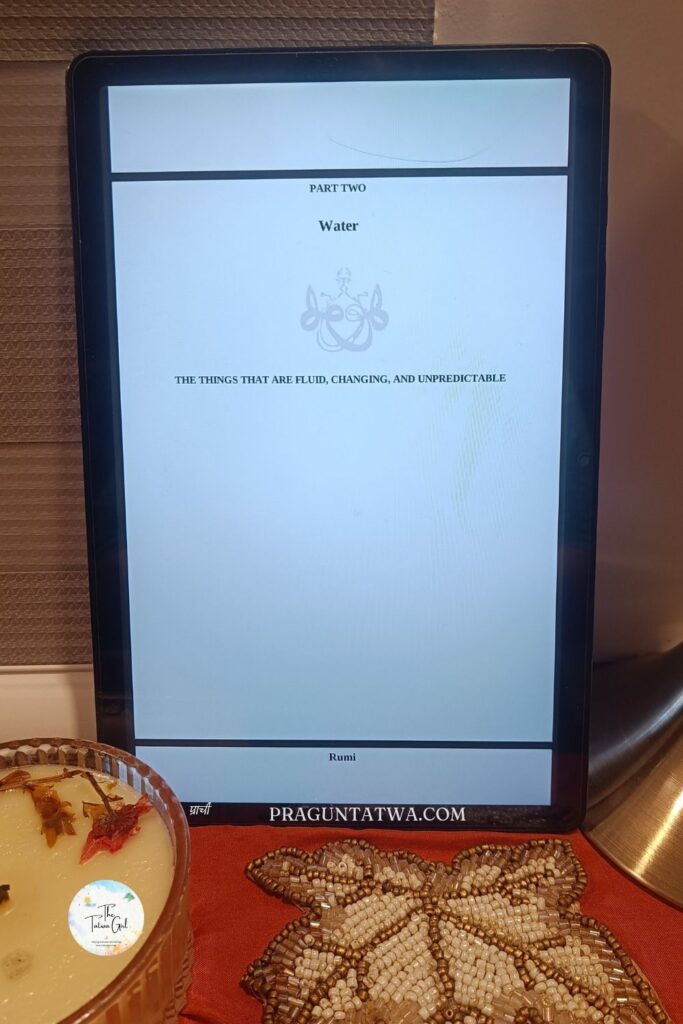
💧 Water — Flow and Change
Here, everything loosens. Emotions move like rivers, unpredictable yet necessary. Characters evolve, stories spill over, and the heart learns to bend.
Flow. Change. Emotional movement.
The part where everything softens and shifts.
🌬️ Wind — Movement and Shift
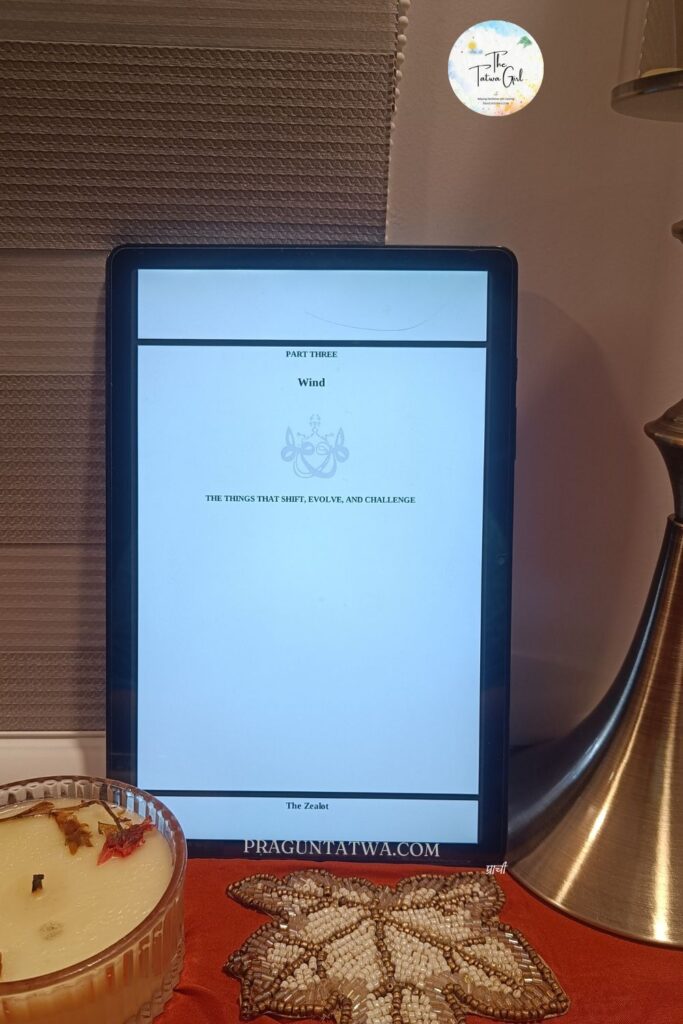
Wind brings conversations, disruptions, new truths. It challenges what we think we know. It shakes, but only to reveal what is real.
New truths. Conversations. Disruptions.
Wind shakes things — only to make them clearer.
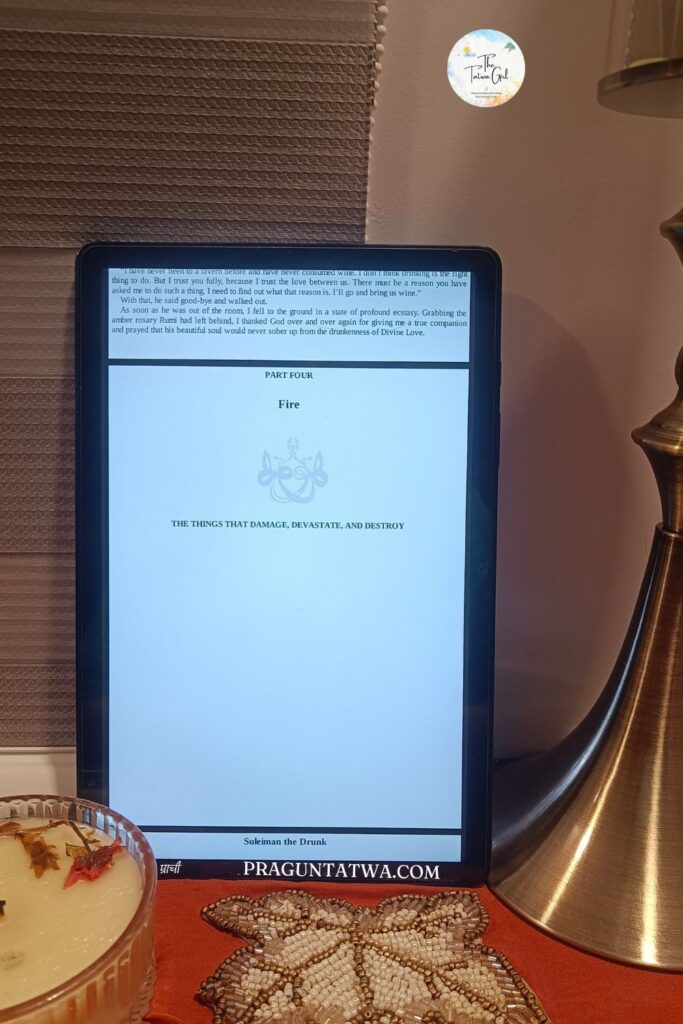
🔥 Fire — Destruction and Purification
Fire in this book isn’t just rage or pain — it’s the sacred burning that clears the path. It is loss, yes, but also illumination. It is the rule that scorches so a new rule can be written.
Destruction that purifies.
The burning that reveals what truly matters.
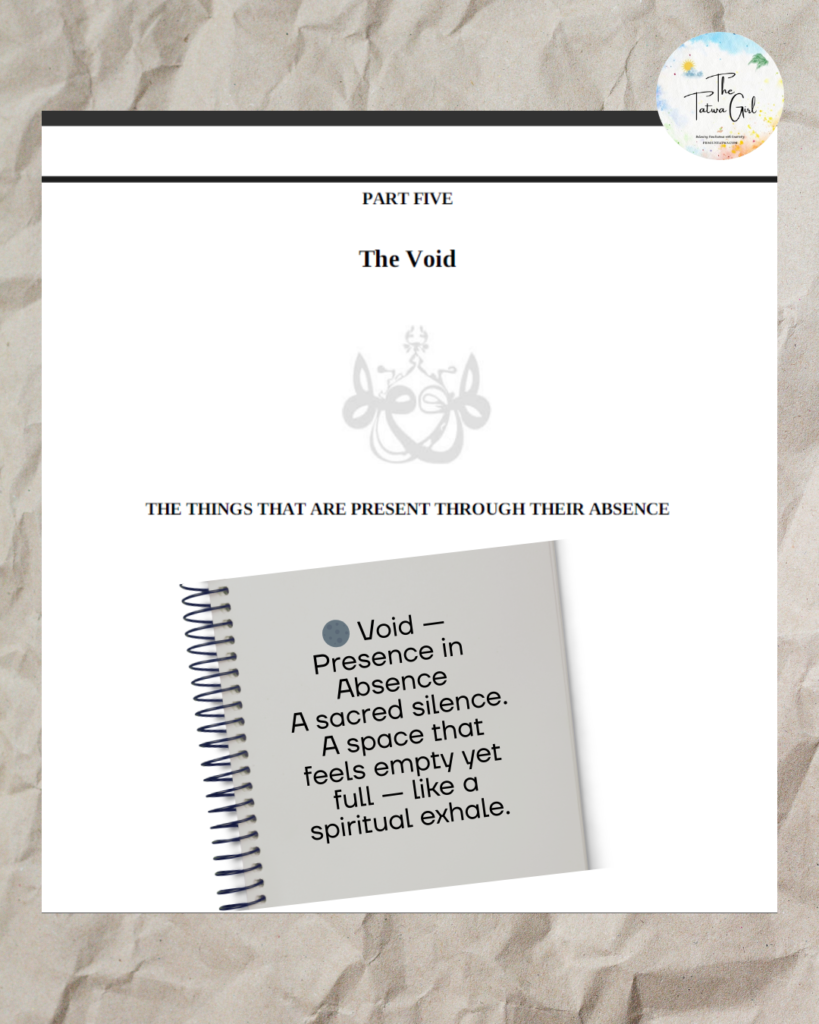
🌑 Void — Presence in Absence
The final section is silence that speaks.
It brings the kind of emptiness that is actually full — a reminder that endings and beginnings often blur into each other.
The presence of something through its absence.
A quiet, spiritual full-stop that feels like a beginning.
These elements didn’t feel like section titles to me; they felt like the spiritual backbone of the story — each one echoing the panchtatwas I’ve always been drawn to.
I finished the book feeling a little quieter, a little more reflective.
As if Shams had walked through my living room, rearranged a few invisible things, and left with a half-smile.
This isn’t a book you “read.”
This is a book you sit with.
Some stories entertain.
Some enlighten.
This one transforms — gently, but completely.
Elif Shafak writes with a softness that still manages to pierce.
Every chapter felt like a whisper — sometimes comforting, sometimes unsettling — but always necessary.
What I loved most was how the narrative jumped between timelines yet felt seamless, like two mirrors reflecting the same truth from different centuries.
Rumi’s evolution, Shams’ unapologetic intensity, and Ella’s unfolding courage made me pause more than once.
Some paragraphs felt like they were written for me on a day I didn’t know I needed them.
Some books you underline.
This one underlines you.
The Aftertaste
I closed the Kindle with a strange tenderness — a sense of being gently rearranged from the inside.
But even the digital version didn’t feel enough.
This is a book I want as a paperback, resting in my library, revisited the way one revisits an old friend or an old wound.
The Forty Rules of Love isn’t a book you simply read.
It is a book that reads you — through your silences, your resistances, your longing.
And that, to me, is the truest kind of love story.
If you’re someone who enjoys spiritual introspection without heaviness…
If you like stories that blend philosophy with human messiness…
If you’re curious about how love can be both anchor and fire…
—this book fits beautifully.
It doesn’t preach.
It opens.
And in doing so, it opens you.
Click here for more reviews from The TatwaGirl
Thank you for joining Prachi The Tatwa Girl. 🌿Read on various Panch Tatwa topics by #TheTatwaGirl.
🌿 Prachi The Tatwa Girl shares stories inspired by the five elements:
- Agni (Fire): Recipes & culinary creations, inspired by Agni’s energy and lifeforce.
- Vayu (Air): Festivals, culture, & traditions, everything around us like beliefs and mythology.
- Aakash (Sky): Travel tales under infinite skies, and my journey experiences.
- Jal (Water): Flowing thoughts & emotions, like water are my flow of thoughts.
- Prithvi (Earth): Eco-friendly living & sustainability, and harmony of our greener planet.
🎙 Green Tatwa Talks: Explore sustainable practices & inspiring Green Warriors on my podcast!
📌 Follow me on LinkedIn, Instagram, & FaceBook, PragunTatwa Feed for more eco-friendly stories.

Leave a Reply